
Over the past two weeks, I have had the opportunity to attempt stop-motion animation for the first time. Stop-motion animation is the process of creating a film by using photos of objects in slightly different positions and stringing them together to make them appear as though they’re moving. An online article by Film Daft has some more interesting information on different types of stop-motion animation and the process of it. This YouTube video also discusses the process of stop-motion animation in movies and the effort and patience that goes into the process.
My First Experience
First, we learned about stop-motion animation with our classmates. We got to use different classroom props and create our own video with the Stop Motion Studio app. I wasn’t sure I’d enjoy stop-motion animation very much. I have a long-standing history of having very little patience for things that take a long time to get such a small product from them. However, I was pleasantly surprised by how much enjoyment I actually got out of this process. There is something so fascinating about making still images come together to create something brand new. We got to be as creative as we wanted to be, which helped with remaining engaged in the activity as well. Below is the video my partner and I created.
While we had so much fun creating this little wedding video, we did run into some challenges making this video:
- We chose props that were too different in size to create the effect we had hoped for.
- Keeping the props stable in an outdoor environment proved to be complicated. We often had our props falling over, making it difficult to create the smooth effect we wanted. Since we had to continuously pick them up, they ended up in different positions than they were originally, making the video a little bit choppy.
- Our first attempt at the video got deleted, which was frustrating. This video was a little bit rushed due to this fact and we did not have time to go back and add any of the fun sound effects at the end!
Despite these challenges, we learned so much from this process and gained some valuable insight into stop-motion animation. This came in handy when we brought stop-motion into a classroom.
Bringing it to the Classroom
The following week, we had an in-situ experience at a local middle school and got to put our skills to use with some grade 5 students. While the process of stop-motion didn’t change, this experience was vastly different from my experience making my film the week before.
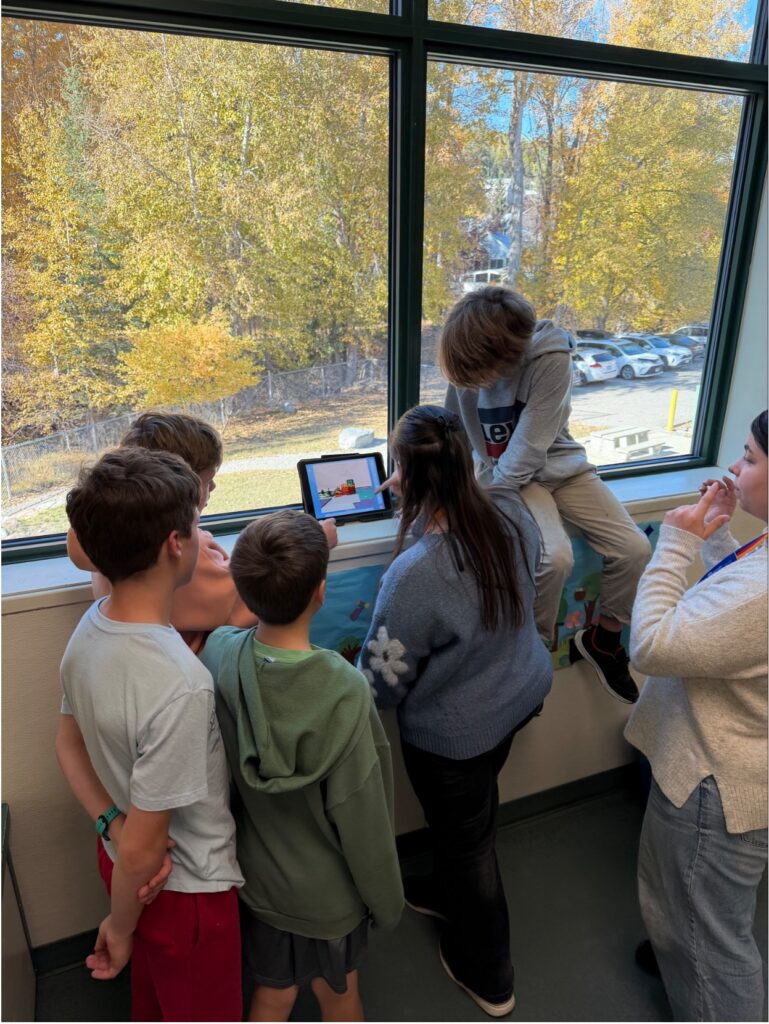
My partner and I worked in a group with four boys, all of whom had immense enthusiasm and were so excited to be making this film. These boys ended up teaching us just as much as we taught them, especially in their excitement, creativity, and knowledge of the Zing Studio app. Their familiarity with the technology was extremely helpful, as we had to use a different app than we had used previously.
Things that went well
- These kids had so many incredibly creative ideas. One thing they did that I found to be so unique was their idea to cut up a bunch of paper and make it “snow.” While this did not appear as anticipated in the film itself, this is an idea that they can incorporate in the future once they build up their skills and make their videos look really cool.
- The boys were all good friends with each other, which helped with the teamwork aspect of the activity. Overall, they agreed on how they wanted the film to look and the direction they wanted their storyline to go.
- The enthusiasm the boys exhibited was contagious and made me even more excited to take this journey with them.
- Because kids in today’s society are so familiar with technology, we didn’t really run into any challenges with the technology itself. The kids were technologically savvy and were able to navigate the app without much support from my partner and me, which was so cool to see.
Challenges
- One thing that was challenging from this experience was balancing all of the ideas the boys had. They were so creative in their plans for our storyline that simply were not all feasible for the given timeframe, seeing how detailed stop motion needs to be. As a future educator, this helped me to recognize the importance of balancing student freedom and encouraging their ideas with realistic expectations.
- After the film was completed, we struggled to get the boys’ ideas in line with the sound effects and recordings they wanted to use. There were a few little arguments during this stage, and ultimately the boys decided they did not want any sound effects at all.
- The video looked extremely fast on the app when we played it back, and it was hard to see what was happening. The boys decided to slow the progression of the frames down. However, this made the final product look a lot slower than it did when we originally watched it on the iPad, which did not create the effect our kids had hoped for
Eventually, we had a finished video! The storyline our kids decided on was animals sailing on a boat, crashing on a mystery island, rebuilding the boat, and sailing away. Here is our finished video!
Benefits of Stop-Motion in School
Stop-motion animation can be an extremely fun and beneficial tool to incorporate into the classroom setting, especially in the higher-elementary grades. Stop-motion teaches students skills such as creativity, patience, problem-solving, and planning. Students can learn these soft skills that will benefit them in every area of their lives in a way that is fun and interesting to them. Stop-motion can be implemented across the curriculum as well. There are many different subject areas that this kind of activity could be integrated into, including literacy, science, and social studies. This Stembits article gives some really interesting project ideas I may use in the future for how stop-motion can be used in science lessons! Stop motion is also another way to integrate student-led and inclusive learning. Students can choose a storyline that interests them, which helps with engagement and learning, and it offers a unique way for them to show their learning in a way that is not traditional writing or exams.
Overall, I am very excited to use stop-motion animation in my future classrooms, and to put the skills and tools I learned to use. Gaining experience and confidence in technology use has been so much fun, and I can’t wait to see what happens next!
Sorry, but comments are not enabled on this site.