
This week, we had the opportunity to visit the SD5 Design Lab. This is a place where students within the district can go and design things with different tools that encourage innovative and transformative education. During our time there, we learned about design and experimented with some of the tools available. This was such an eye-opening experience, and I had so much fun exploring everything the Design Lab had to offer!
The Design Process
One of the main things we talked about during our trip to the Design Lab was the design process. This process consists of 4 main steps: design, build, test, and make it better. I appreciate how simply the process was broken down; this makes it so much easier to introduce this concept to elementary-aged students.
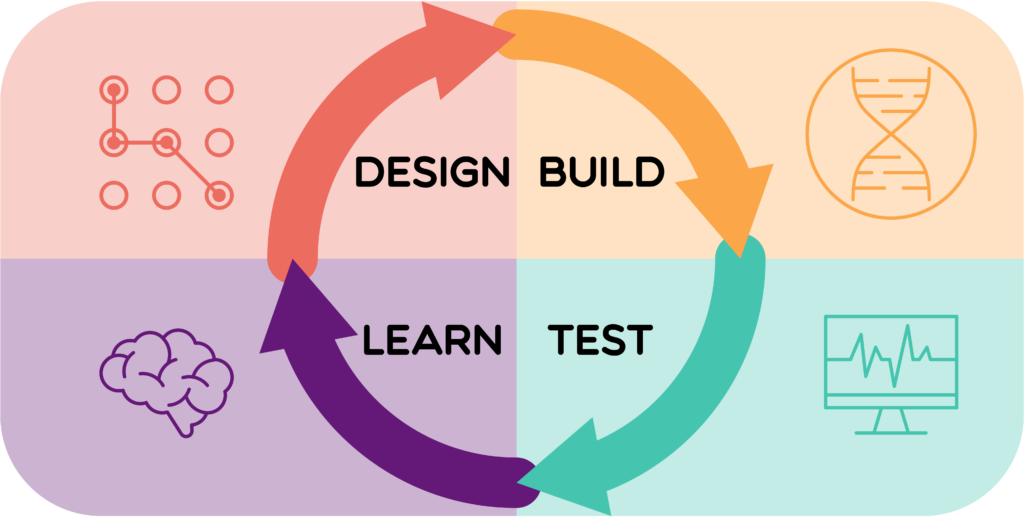
The first step, design, involves brainstorming ideas and creating a plan for execution. The second step, build, involves taking the ideas that have been brought forward and putting them into action. It requires the use of innovative tools and hands-on creation. Once students have a finished product they feel content with, they move to the testing stage. This part of the process involves putting their products to use and seeing how they perform in action. Finally, students are encouraged to learn from what they saw during the testing and building stage and find ways to make it better.
Something that stood out to me about this process is that it is not one and done or linear. Students may repeat the process multiple times or remain on the same step for an extended period of time before they are satisfied with their finished product. I think this is such an important concept to introduce to young students because it reinforces the idea that mistakes are normal, and the process of creating something matters just as much as the finished product. Additionally, this process also encourages students to engage in problem-solving by redesigning the same piece of work relentlessly until they are completely happy with the final result.
Exploring the Tools
During my time at the Design Lab, I got to experiment with a variety of tools. The first thing I got to try was the button maker. This was such an interesting device. It is a press machine that layers a metal shell, the design you choose or create, and a plastic covering.
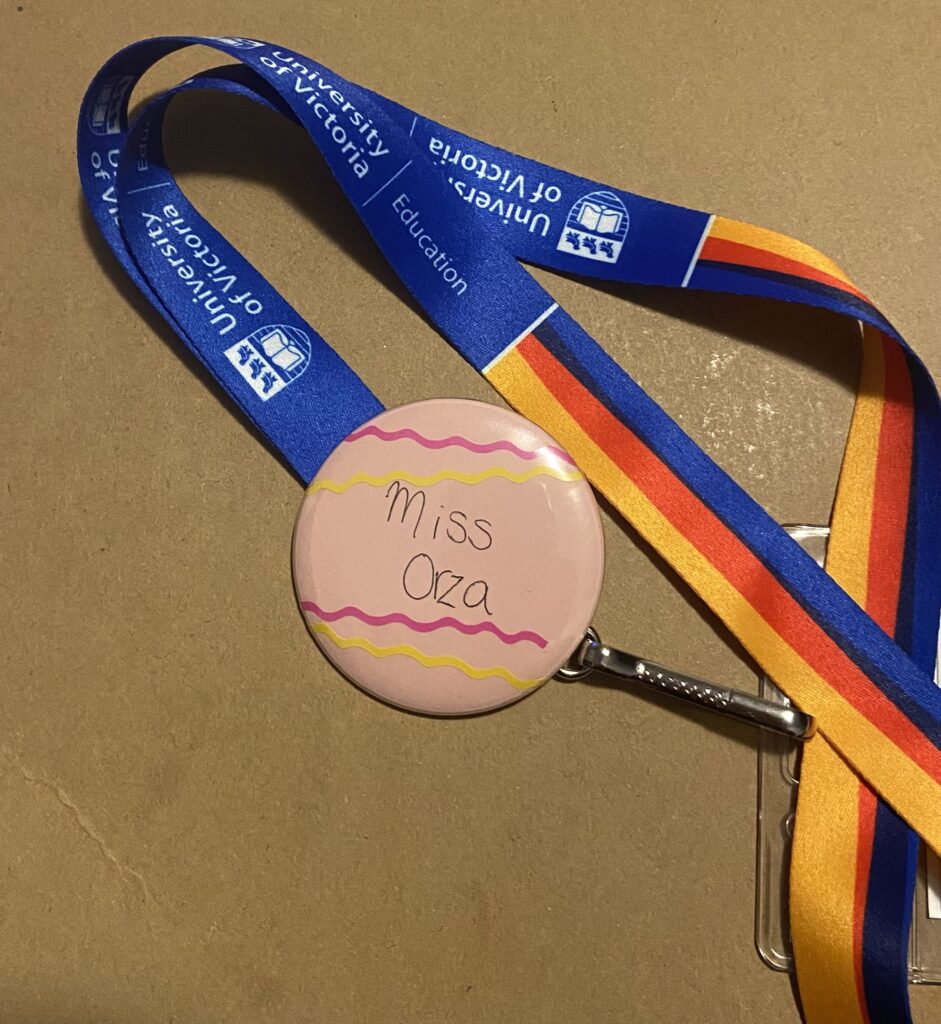
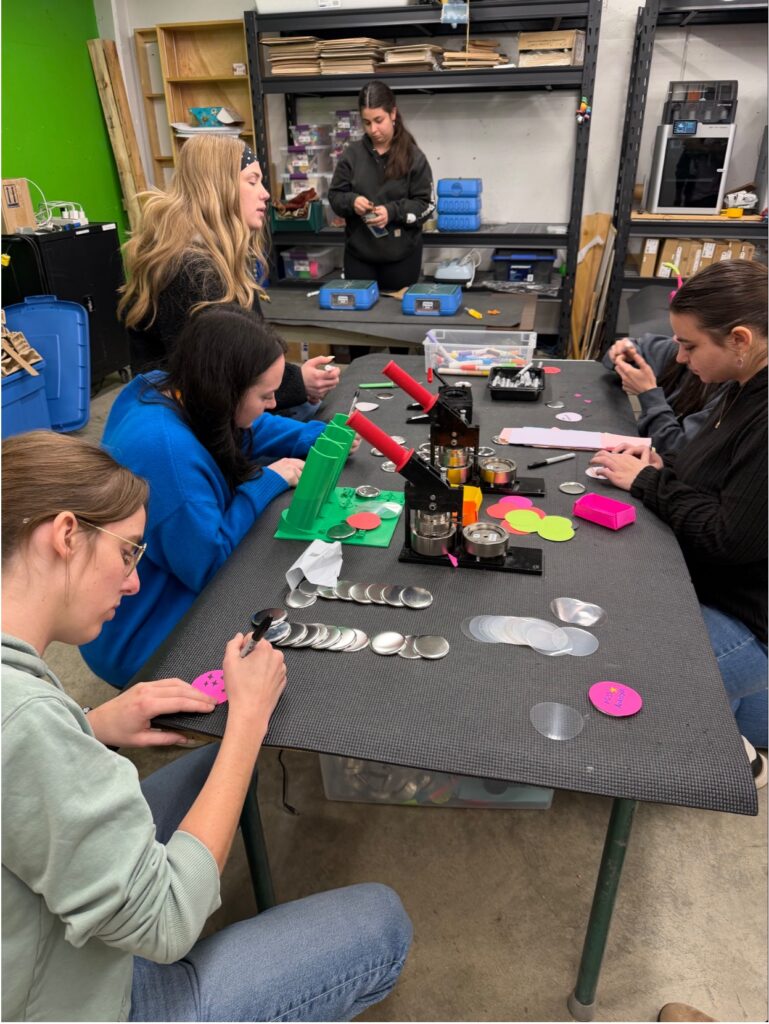
I have never used a machine like this before, and I love the concept of it. I appreciated how, between the metal and plastic layers, we were able to create our own creative design that matched our personalities. I think this would be such a fun tool to use with students. The device itself is a little bit challenging, and younger students would likely need some assistance with it. However, students could easily create their own designs on paper for the middle layer and have something they can be excited to use at the end.
The second tool that I had the chance to use was the 3D pens. These pens heat coloured plastic, called filament, to create super interesting 3-dimensional physical pieces of art.
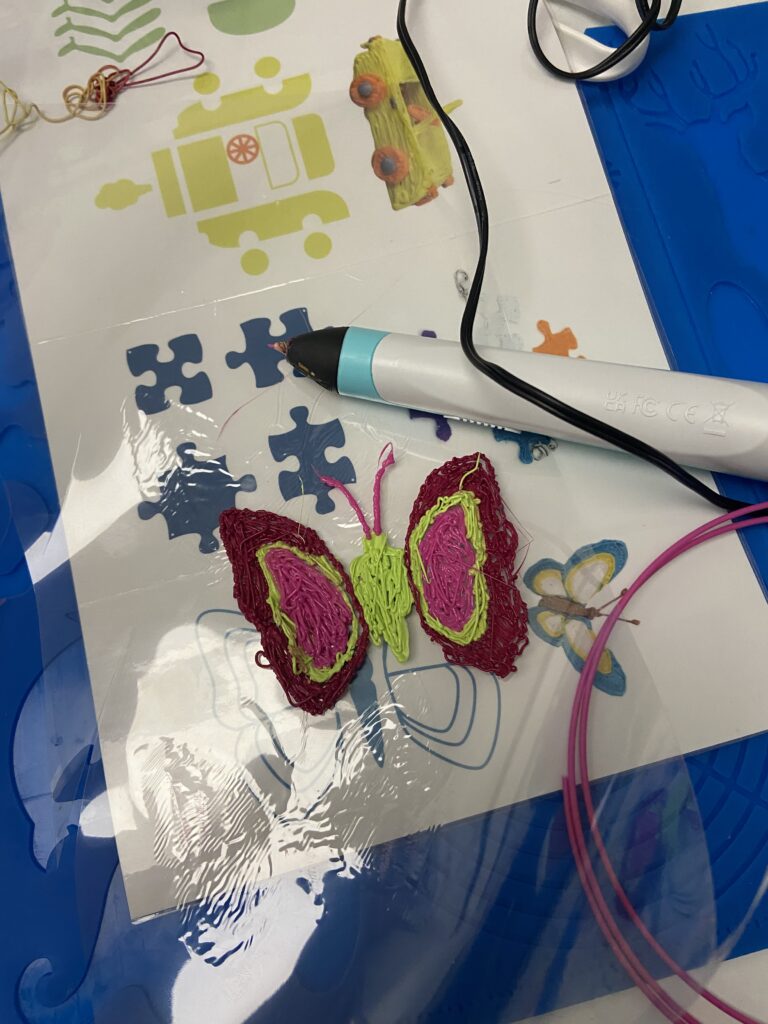
My experience using the pen was a challenge. It is definitely not easy to use because it requires a lot of precision, but the filament comes out quickly. I appreciated how many different options for patterns we had access to in the design lab. This gave the project a little bit more structure for my first attempt rather than just having to freehand a design. I ended up making a butterfly; I wanted to experiment with using multiple colours in one project. For my very first attempt at something like this, I think it turned out pretty good!
Innovative Education
Innovation in education is such a hot topic right now, and we often jump straight to technology when we think about it. However, innovation in education is about so much more than that. It involves rethinking traditional approaches to education and finding creative ways to make learning more engaging and meaningful for our students. Innovation in education allows students to develop creative skills, soft skills, and critical thinking that traditional education lacks at times. It also allows students to take control and responsibility over their learning experience. I thought this video, which discusses different ways innovation is finding its way into the education system, was interesting!
I think the design lab is an excellent example of innovation in education. It provides students with access to so many different hands-on tools that encourage them to be creative, explore, and be active participants in their learning. Through the design process and experimenting with these tools, students can learn important skills like problem-solving, critical thinking, and perseverance that will be beneficial to them not only through their school career but through the rest of their lives.
As a future educator, I can definitely see myself using a resource like the design lab to encourage innovation in education in my classroom. Tools that I saw but did not have the chance to use, like the Chomp saw or Ozobots, are incredibly cool tools that enhance creativity. I can definitely see myself using tools like that with my future students to encourage hands-on learning throughout different curricular areas. My biggest takeaway from this experience is that innovation in education does not require high-end and expensive technological equipment. Sometimes, just a button press and a little bit of creativity are all you need to encourage students to take responsibility for their learning and build beneficial skills that will follow them throughout their lives.
Sorry, but comments are not enabled on this site.