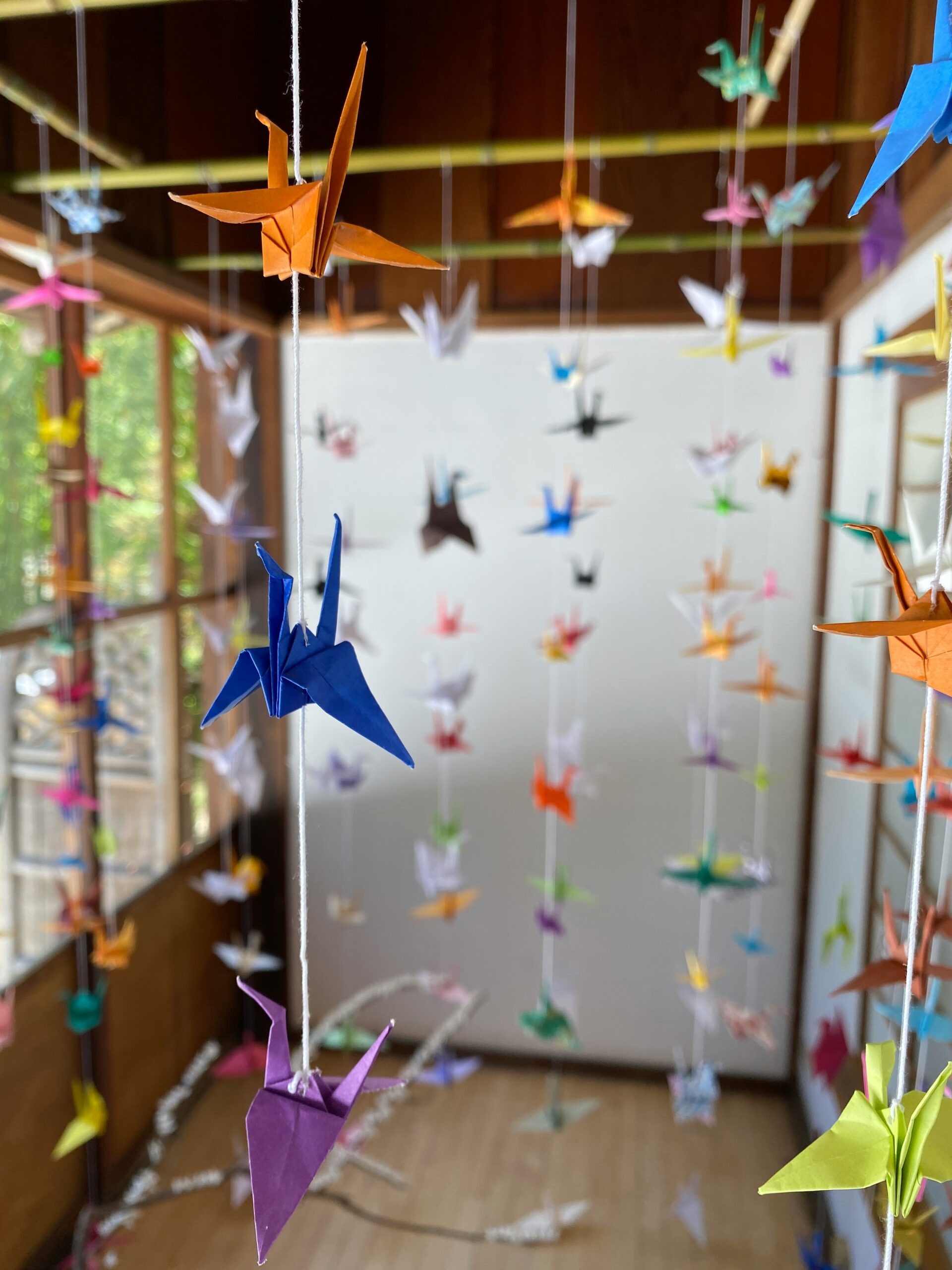
For my final post, not only did I want to create a final origami project, but I also wanted it to be a meaningful one. When talking to some friends about my origami journey, I was told the story of 1000 paper cranes. Fascinated by this idea, I decided to do some research on it. I didn’t realize the deep historical and cultural significance this craft holds, particularly in Japan, where it originated. The story behind this project is so beautiful, so it felt only right that I share it in this post.
The Legend
Senbazuru (which translates to 1000 cranes) is a Japanese term that refers to the folding of 1000 origami cranes. In Japanese culture, cranes are considered a symbol of longevity, happiness, and good fortune. They are associated with a long and healthy life because they are themselves believed to live for 1000 years. Originally, the tradition entailed people folding these cranes to make a wish for a long and healthy life for themselves or someone they love. Over time, it expanded to represent several different wishes and intentions including:
- Recovery from illness or injury
- Happiness and good fortune
- Success in their personal goals
- Peace and hope for the future

The tradition is associated with the belief that folding 1000 paper cranes will make a wish come true. However, folding this many cranes also takes dedication, patience, and perseverance, making the process meaningful. Today, people create and gift senbazuru to express their love and encouragement for the people they love.
You can learn more about this tradition here.
Sadako Sasaki’s Story
One of the most well-known stories associated with this tradition is that of Sadako Sasaki, a young Japanese girl who lived in Hiroshima during World War II. Sadako was just two years old when the atomic bomb was dropped on Hiroshima in 1945. Although she and her family survived the initial explosion, the radiation she was exposed to resulted in her developing leukemia at the age of 11. While receiving treatment, she learned about the tradition of senbazuru from a friend. She was inspired by the idea that folding these cranes would grant her a wish, and she began the process in hopes she could recover from her illness. While this was her original wish, eventually, she changed her wish based on her desire for peace in the world
Unfortunately, Sadako did not recover from her illness and passed away at the age of 12. There are conflicting accounts of how many cranes she completed before her death; some suggest that she folded 644, with her friends completing the remaining cranes after she passed. Other accounts say she exceeded her goal and folded approximately 1400 cranes.
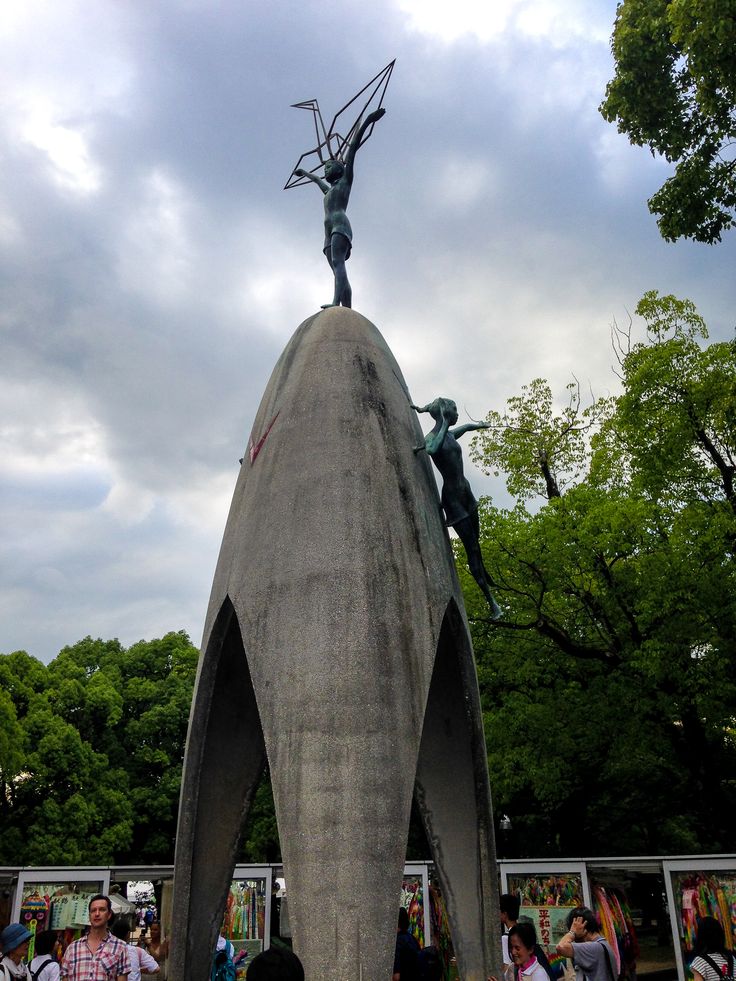
Even after her death, her story continued to spread throughout Japan, and eventually around the world. Her determination inspired others to fold paper cranes in her memory, making it a widely recognized symbol of peace and hope. Today, a statue of Sadako holding a golden crane stands at the Children’s Peace Monument in Hiroshima (seen above). Thousands of paper cranes are brought here in her memory to promote the message of world peace.
The following YouTube video discusses more information on the tradition, Sadako’s story, and the process of folding a paper crane!
Connecting to the Classroom
This story provides many different classroom applications and opportunities to talk about origami as more than just folding paper. As a future educator, I think this tradition provides students with a way to learn about Japanese culture while also encouraging conversations about empathy, perseverance, and hope. There are several ways I could incorporate this into my future classroom. A few of my favourite options include:
- Exploring the Japanese Culture: Students could learn about the cultural significance of the paper crane and the tradition of senbazuru. This would provide the opportunity to explore a culture different from their own and develop an appreciation for the different practices they have.
- Collaborative projects: Students could work together over the course of the year to fold as many paper cranes as they can that represent a shared classroom wish. Students could contribute cranes together and individually to a class display. This would reinforce the importance of working together towards a common goal.
- Social and Emotional Learning: This tradition and story could be used to contribute to class discussions on hope, resilience, and supporting one another through difficult times. Students could reflect on what things like peace and kindness mean to them and discuss how they can demonstrate these things in their every day lives
- Literacy: The picture book “Sadako,” written by Eleanor Coerr would be an excellent way to connect this story to a literary piece. Below is a YouTube read aloud of this story:
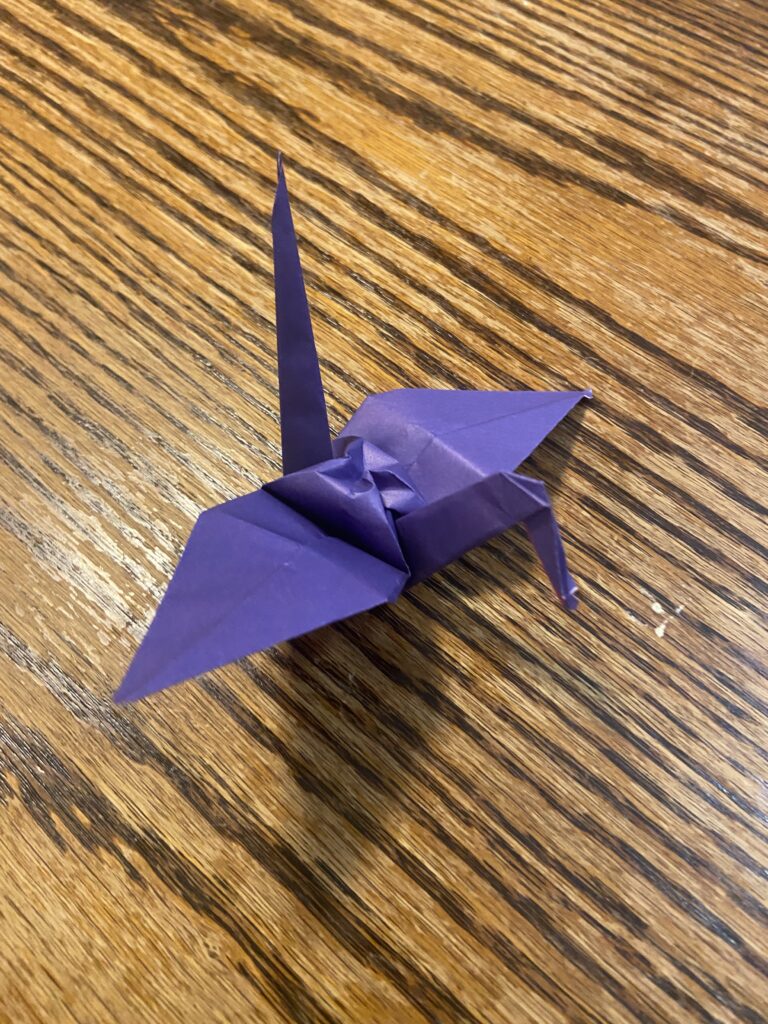
In preparation for incorporating this into future classes, I felt it was only right that I attempt to make a paper crane as well. This allowed me to take the folding techniques I have learned and apply them to this story and tradition. While folding my paper crane, I found myself reflecting on Sadako’s story and pondering what I would wish for if I had the chance.
Reflection
Before learning about the story of 1000 paper cranes, I had primarily viewed origami as a creative activity that simply involved folding paper into shapes and structures. Learning about the tradition of senbazuru and the story of Sadako helped me to recognize the deep cultural significance behind the craft. I found it inspiring how something so small could hold symbolism of hope, peace, and dedication for so many people. If I implement origami in my classrooms in the future, I want my students to hear about this story so they can get a deeper understanding and appreciation for different cultures. I want them to not only see this craft as a fun activity, but recognize why it is so meaningful.
Sorry, but comments are not enabled on this site.